


Page 65 - HKCAAVQ AR 2018-19
P. 65
Research & Training
Ӻʿ
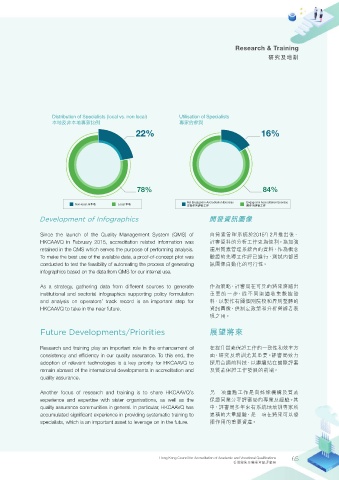
Distribution of Specialists (local vs. non local) Utilisation of Specialists
本地及非本地專家比例 專家的參與
22% 16%
78% 84%
Not Engaged in Accreditation Exercise Engaged in Accreditation Exercise
Non-local 非本地 Local 本地 沒有參與評審工作 曾參與評審工作
Development of Infographics ක೯༟ৃྡ྅
Since the launch of the Quality Management System (QMS) of Іሯ९၍ଣӻ୕2015ϋ2˜પ̈ܝd
HKCAAVQ in February 2015, accreditation related information was ൙ᄲ༟ࣘٙʱؓʈЪһމکлfމ̋੶
retained in the QMS which serves the purpose of performing analysis. ༶͜ሯ९၍ଣӻ୕ʫٙ༟ࣘdЪމ฿ׂ
To make the best use of the available data, a proof-of-concept pilot was ᜕ᗇٙኬʈЪʊආБd༊ʫ༟
conducted to test the feasibility of automating the process of generating ৃྡ྅Іਗʷ̙ٙБf
infographics based on the data from QMS for our internal use.
As a strategy, gathering data from different sources to generate Ъމഄଫd൙ᄲ҅ί̙Ԉٙਗ਼Ըਗ਼ሸ̈
institutional and sectorial infographics supporting policy formulation ࠠࠅٙɓӉdʔΝಬ༸ϗණᅰኽ༟
and analysis on operators’ track record is an important step for ࣘd˸ႡЪϞᗫࡈй৫ࣧձޢйٙ
HKCAAVQ to take in the near future. ༟ৃྡ྅dԶՓ֛݁ഄձʱؓᐄ፬٫ڌ
ତʘ͜f
Future Developments/Priorities ࢝ૐਗ਼Ը
Research and training play an important role in the enhancement of ίʺሯ९ڭᗇʈЪٙɓߧձࣖଟ˙
consistency and efficiency in our quality assurance. To this end, the ࠦdӺʿˈՉࠠࠅf൙ᄲ҅ߧɢ
adoption of relevant technologies is a key priority for HKCAAVQ to મ͜Υቇٙ߅Ҧd˸ᘱᚃ१ίყ൙ᄲ
remain abreast of the international developments in accreditation and ʿሯ९ڭᗇʈЪ೯࢝ٙۃ၌f
quality assurance.
Another focus of research and training is to share HKCAAVQ’s ̤ɓධࠠᓃʈЪ݊Σ֒֊ዚʿሯ९
experience and expertise with sister organisations, as well as the ڭᗇΝุʱԮ൙ᄲ҅ٙਖ਼ุʿ᜕fՉ
quality assurance communities in general. In particular, HKCAAVQ has ʕd൙ᄲ҅εϋԸϞӻ୕ήਖ਼ה
accumulated significant experience in providing systematic training to ଢ଼ጐٙɽඎ᜕d݊ɓධίਗ਼Ը̙˸೯
specialists, which is an important asset to leverage on in the future. ౨Ъٙࠠ͜ࠅ༟ପf
Hong Kong Council for Accreditation of Academic and Vocational Qualifications 65
࠰ಥኪஔʿᔖุ༟ዝ൙ᄲ҅

