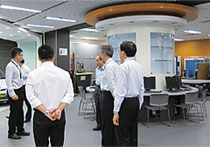
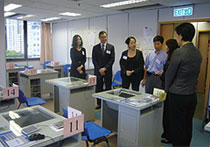
In the reporting year, the HKCAAVQ continued to act and respond proactively to the increasing demand for accreditation and consultancy services in the vocational education and training (VET) sector. With the launch of the Hong Kong Diploma for Secondary Education (HKDSE), the HKCAAVQ has been conducting benchmarking studies for various qualifications and facilitating the implementation of the New Academic Structure.
Extensive Scope of Accreditation Service
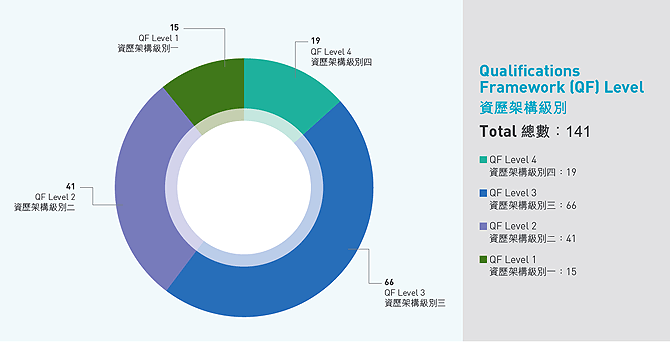
In 2011/12, the HKCAAVQ conducted Initial Evaluation (IE) for 34 operators from diverse backgrounds and conducted 141 Programme Validations (PV) in a wide-range of industry sectors. These operators came from public organisations, long-established education/training institutes, non-governmental organisations and commercial corporations of different scales. Employing the fitness-for-purpose approach, we validated a wide range of programmes in areas such as pre-employment training, in-house training, in-service training and skills development. During the reporting year, 485 programmes were also operated by the Vocational Training Council (VTC) under the Programme Area Accreditation (PAA) status.
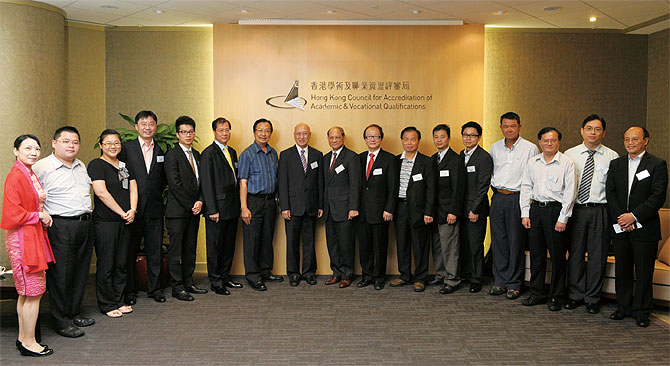
The HKCAAVQ moderates the Specification of Competency Standards (SCS) developed by the respective Industry Training Advisory Committees (ITACs). The SCSs identify the specific outcome standards required for different Qualifications Framework (QF) levels for different industries. During the year, we validated 58 SCS-based programmes for the Beauty Care, Chinese Catering and Property Management industries.
Apart from accrediting programmes of specific natures, the HKCAAVQ also plays an important role in the quality assurance of Recognition of Prior Learning (RPL) under the QF. The RPL mechanism enables employees of various industries to receive formal recognition of the knowledge, skills and experience they have acquired over time. In the reporting period, the HKCAAVQ accredited RPL Assessment Agencies for the industries of Automotive, Jewellery and Logistics.
Consultancy Service and the New Academic Structure
Benchmarking study
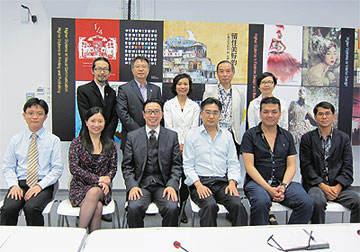
The HKCAAVQ was commissioned by the Education Bureau (EDB) to conduct a benchmarking study for ten selected Applied Learning (ApL) courses of the New Senior Secondary Curriculum against the standards of the HKDSE. The study, which employed both quantitative and qualitative methods, was completed in July 2011. |
 |
The HKCAAVQ was also entrusted to conduct a similar benchmarking study for the Yi Jin Diploma (YJD), which is a new qualification under the new Senior Secondary Education System. The result of this study showed that YJD was comparable to the attainment of Level 2 in five subjects, including Chinese and English, in the HKDSE. Another benchmarking study for the Mathematics modules of YJD is underway and expected to be completed in April 2012.
Quality Assurance for Applied Learning Courses
To ensure the quality of the ApL courses, the HKCAAVQ was engaged by the EDB to conduct quality assurance (QA) visits to course providers. In the reporting period, the HKCAAVQ conducted QA visits to 11 ApL courses which were delivered by six different course providers in the post-secondary education sector.
Continuous Enhancement of Accreditation Service
The HKCAAVQ makes continuous efforts to further improve our service and to keep pace with the development of the VET sector. In August 2011, the HKCAAVQ conducted a comprehensive review to evaluate the effectiveness of the new set of accreditation tools that was implemented in September 2010.
Through the use of the tools and the associated process improvements the average processing time for vocational accreditation exercises was shortened from 20 weeks to 12 weeks. The feedback collected showed that the self-assessment checklist and the list of requisite evidence against each accreditation criterion helped operators in the preparation of accreditation documents. In response to the views collected from the stakeholders, new tools were developed for the processing of combined IE and PV exercises.
In view of the growing demand for accreditation of Higher Diploma (HD) and Associate Degree (AD) programmes, the HKCAAVQ developed a guide in February 2012 for the preparation of accreditation documents for PV of HD/AD programmes. It provides the operators with basic and essential information required for PV, as well as templates for the major items listed in this guide. Meetings with first-time potential operators were arranged to enhance their understanding of the accreditation criteria.
Collaboration with the VET Sector
The success of the HKCAAVQ in serving the VET sector lies in mutual understanding. To this end, we are actively engaged in communication with our stakeholders in different settings and collecting their feedback for enhancing our services. During the reporting year, the HKCAAVQ continued its representation in the ITACs, which are set up by the Government for employers, employees, professional bodies and other stakeholders in particular industries.
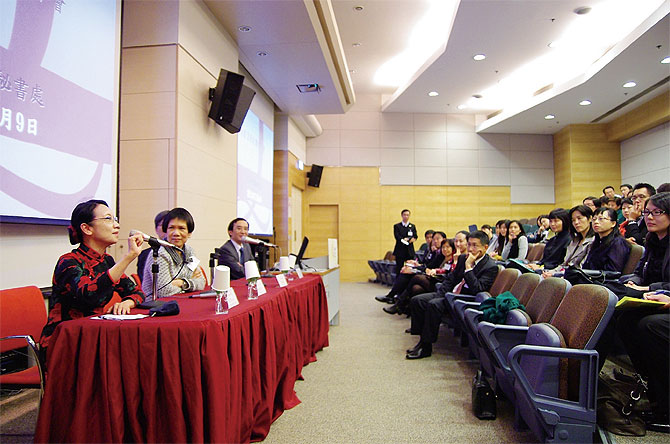
We also reached out to key stakeholders in the VET sector through various briefing sessions or tailor-made workshops to acquaint them with the accreditation criteria and procedures. Over the past year, the HKCAAVQ, in partnership with the QF Secretariat, conducted a number of briefing sessions for potential operators in the Logistics, Property Management, Retail and Automotive industries, and introduced to them the procedures for collective accreditation and the new set of accreditation tools.
Looking Forward
The emergence of continuing education and lifelong learning as a key strategy of Hong Kong's education and training policy has led to an increasing demand for accreditation services, in terms of diversity and quantity, from the VET sector. In response to the increasing demand, the HKCAAVQ will continue to explore ways to collaborate with our key stakeholders to extend and enhance our services to assure the quality of vocational education and training in Hong Kong. |
 |
Breakdown of vocational programmes validated (1 April 2011 - 31 March 2012)
|